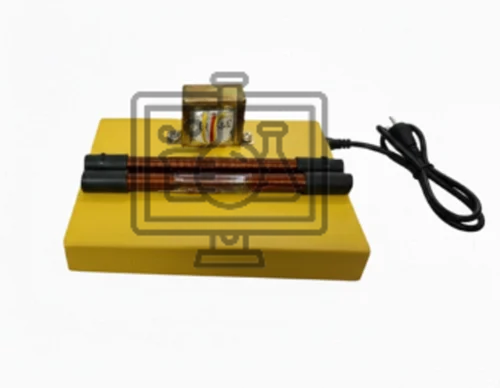
Heat Conductivity Apparatus
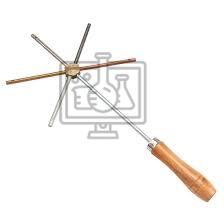
Product Code : SCL-PMP-11337
Last updated: 6 October 2026
Heat Conductivity Apparatus - Ambala Science Lab
Product Description
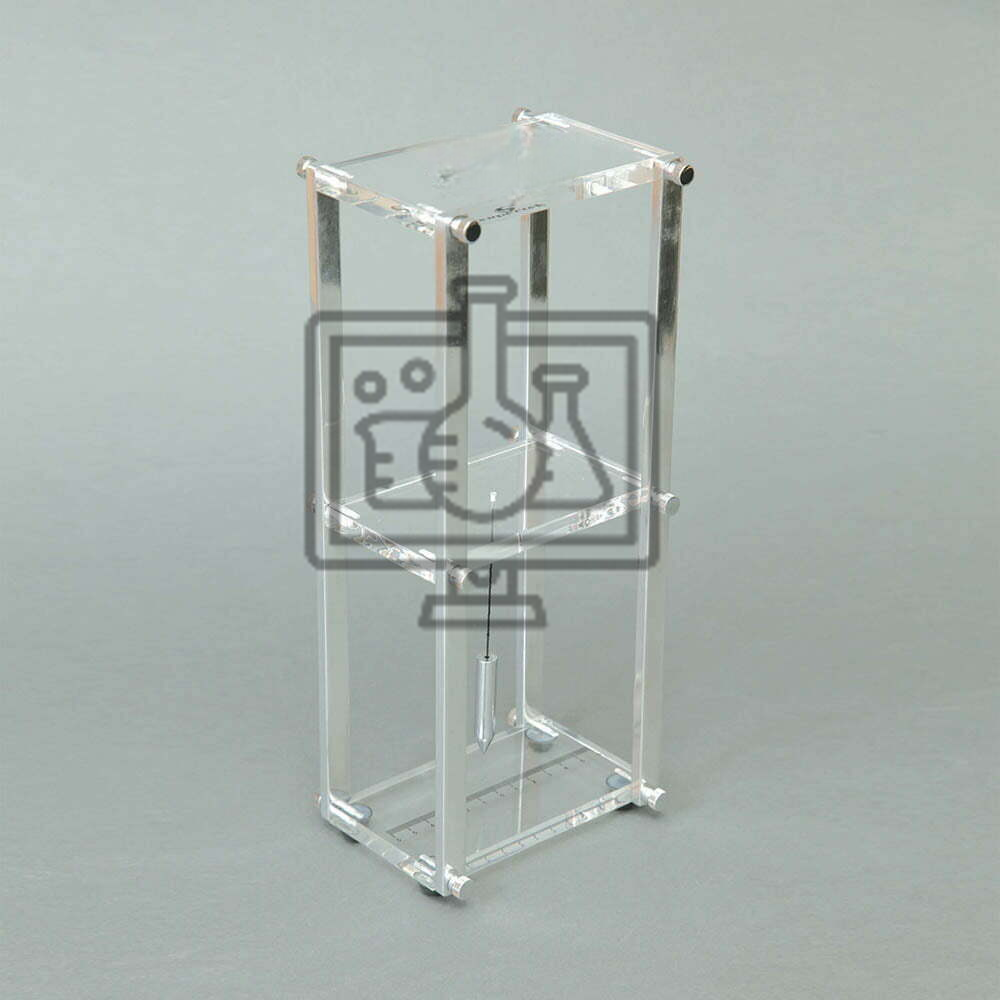
The Heat Conductivity Apparatus by Ambala Science Lab is a laboratory teaching instrument designed for practical demonstration of thermal conductivity, heat transfer, rate of conduction, and comparison of conductive properties of different materials. It is widely used in school physics laboratories, college science labs, STEM classrooms, and teacher demonstration sessions where students need to understand how heat travels through solids.
This apparatus helps learners study the principle of heat conduction by showing how different materials transfer heat at different rates. It is especially useful for explaining the difference between good conductors and poor conductors of heat, making it an important apparatus for concept-based physics teaching and laboratory experiments.
The apparatus is suitable for demonstration and practical observation of thermal behavior in metals and other solid materials. It supports clear and measurable understanding of heat flow, which helps students connect theory with real laboratory experience. The visible nature of the experiment improves concept clarity and strengthens understanding of thermal physics.
The Ambala Science Lab Heat Conductivity Apparatus is designed for routine academic use with a focus on stable construction, easy handling, repeatable results, and classroom practicality. It is suitable for physics practicals, science exhibitions, lab demonstrations, and STEM learning activities.
Product Specifications
Specification |
As published |
Brand |
Ambala Science Lab |
Product Name |
Heat Conductivity Apparatus |
Category |
Physics Lab Equipment / Thermal Physics Apparatus / Educational Demonstration Instrument |
Application |
Demonstration of heat conduction and comparison of thermal conductivity of materials |
Working Principle |
Transfer of heat through solids by conduction |
Construction |
Laboratory-grade apparatus with conductive test elements and heating arrangement |
Operation |
Manual experimental setup for classroom and lab use |
Use Area |
Schools, colleges, universities, teacher training institutes, STEM labs |
Subject Coverage |
Physics, thermal properties of matter, heat transfer, material studies |
Learning Level |
Secondary, senior secondary, undergraduate, teacher demonstration |
Finish |
Educational lab-grade finish |
Durability |
Designed for regular academic and demonstration use |
Key Features
- Designed to demonstrate thermal conductivity through practical observation
- Useful for comparing heat transfer in different materials
- Supports clear understanding of conduction in solids
- Suitable for repeated classroom and laboratory demonstrations
- Simple setup for quick and effective practical use
- Helps explain good conductors and poor conductors of heat
- Appropriate for physics labs, exhibitions, and STEM learning sessions
How to Use the Heat Conductivity Apparatus
- Place the apparatus on a stable and heat-safe laboratory surface.
- Ensure all rods, strips, or conductive elements are properly fixed in position.
- Prepare the apparatus according to the required classroom or laboratory method.
- Apply heat carefully at the designated heating point.
- Observe how heat travels through the conductive material.
- Compare the rate of heat transfer among different materials, if multiple samples are used.
- Record the observations related to conduction speed and heat movement.
- Allow the apparatus to cool down before handling or storing it.
- Clean and store the apparatus properly after use.
Educational Benefits
The Heat Conductivity Apparatus is an effective tool for teaching one of the core concepts of thermal physics. It helps students understand how heat flows through solids and why some materials conduct heat better than others. The apparatus improves practical learning by converting theoretical principles into direct observation, making it valuable for science practicals, concept demonstrations, and interactive classroom sessions.
Frequently Asked Questions
1. What is the Heat Conductivity Apparatus used for?
It is used to demonstrate heat conduction and to compare the thermal conductivity of different materials in physics experiments.
2. Who can use this apparatus?
It is suitable for physics teachers, school students, college students, lab instructors, and STEM educators.
3. Is it suitable for school laboratories?
Yes, it is widely used in school and college physics laboratories for thermal physics demonstrations and practical learning.
4. What concepts can be studied with this product?
Students can study heat conduction, thermal conductivity, heat transfer in solids, and the difference between good and poor conductors.
5. Is it difficult to operate?
No, it is generally simple to use under laboratory supervision and is suitable for routine educational demonstrations.
6. Can it be used for science exhibitions?
Yes, it is suitable for science fairs, classroom demonstrations, and concept-based educational displays.
7. Does it require electricity?
The method of heating may vary by model, but the apparatus is generally used as a manual educational demonstration setup.
8. Why choose Ambala Science Lab?
Ambala Science Lab focuses on educational laboratory products designed for concept clarity, practical use, and dependable classroom performance.
Related products in Physics Miscellaneous Products
Pendulum of Varying Length Apparatus | Archimedes Principle Kit | Magnetic Field Apparatus | Centre of Gravity Apparatus | Oersted's Law Apparatus | Leaning Tower of Pisa model
Range and ordering
This item is part of the Physics Miscellaneous Products range within Physics Lab Equipment. Bulk, tender and OEM quantities, including buyer branding, are handled through lab tenders and OEM orders. Email [email protected] or use the contact page.
", "sku": "5", "gtin8": "5", "gtin13": "5", "gtin14": "5", "mpn": "5", "aggregateRating": { "@type": "AggregateRating", "ratingValue": "5", "bestRating": "5", "worstRating": "0", "ratingCount": "10" } }
.jpg)

.png)